Creosote - a condensed volatile compound that forms when wood smoke cools against flue walls - doesn't look dangerous from your living room. Neither does soot, the fine carbon particles that settle after every fire. Both accumulate quietly through Oklahoma City's burn season, which runs roughly October through March. By the time homeowners notice a change in smoke behavior or a new odor, the buildup is usually well past one season.
What Comes Out of Your Chimney Matters More Than You Think
Professional chimney cleaning removes creosote, soot, ash, and debris from your flue - and tells you exactly what stage the buildup reached.
Oklahoma Chimney Sweep Pro handles chimney cleaning and chimney sweeping - the mechanical process of removing combustion deposits using brushes, rods, and vacuum equipment - for homes and businesses across OKC. Every appointment ends with a written record of your flue's creosote stage classification. You get more than a cleaned chimney. You get documented proof of what was there.
Stage 1Flaky and brushable with standard equipment.
Stage 2Tar-like. Needs heavier brush pressure and sometimes chemical pre-treatment.
Stage 3Glazed. Requires chemical loosening before mechanical cleaning works.
From Oklahoma Chimney Sweep Pro's lead technician:
What a Cleaning Actually Looks Like in the Field
I've been on thousands of Oklahoma City chimneys. The ones that surprise homeowners most are the ones that looked totally fine.
I showed up to a home in northwest OKC last February. The homeowner had used the fireplace steadily since October - good habits, decent wood, nothing unusual. They'd had it cleaned two seasons ago and assumed they were fine.
When I got the camera into the flue, I saw Stage 2 creosote - the tar-like, harder-to-remove classification in our three-stage system - coating the upper third of the liner. The firebox, which is the combustion chamber where the wood actually burns, looked clean from the outside. The problem was above the smoke shelf, where condensation happens first.
We ran the chimney brush - a rotary tool that mechanically dislodges deposits from the flue walls - through a full sequence, starting from the top. Then we pulled everything out from below using a commercial vacuum unit with a HEPA filter. No soot in the room.
After the mechanical cleaning, I documented the creosote stage in writing on the job report: Stage 2 on entry, Stage 1 residual post-cleaning. That's the record the homeowner keeps. Not just a receipt that says "cleaned."
That's the difference between knowing and guessing. When they called the following October, I already had their flue history. The second cleaning took less time because we weren't starting from scratch on the assessment.
Job reportNorthwest OKC, February
Creosote at entry
Stage 2 upper third of the liner
Method
Top-down rotary brush, HEPA vacuum at the firebox
Firebox
Inspected separately, clean
After cleaning
Stage 1 residual
Left with the homeowner. On file for next October.
Stage classification - the CSIA (Chimney Safety Institute of America) three-stage system that rates creosote from Stage 1 (flaky, brushable) through Stage 3 (glazed, requiring chemical treatment) - is how we communicate condition honestly. Most OKC homeowners have never seen that written down after a cleaning. They should.
Oklahoma City's Burn Habits Create a Specific Kind of Problem
OKC's six-month burn season and common wood choices produce creosote patterns that follow a predictable cycle.
No third-party dispatch. Crews leave from Oklahoma City and reach metro homes within the scheduled window.
Here's what most homeowners don't realize about Oklahoma City fireplaces: the problem isn't just how much wood you burn. It's how you burn it.
Our crews have been dispatched directly from Oklahoma City since 2016. Over that time, we've seen the same pattern repeat. Homeowners who let fires smolder overnight - common practice during cold snaps in January and February - generate more Stage 2 creosote than those who run hot, shorter burns. Partially seasoned wood makes it worse. OKC sits in a climate zone where temperatures swing hard in late fall, and a lot of wood gets cut and burned in the same season without proper drying time.
The NFPA 211 annual inspection cycle - the NFPA's (National Fire Protection Association) recommended guideline of inspecting and cleaning chimneys at least once per year - doesn't account for households that run fires five nights a week from November through February. Some OKC flues we see in late February carry two full seasons of buildup. The previous year's cleaning got skipped, or the previous cleaner didn't catch the transition from Stage 1 to Stage 2.
The firebox is inspected separately from the flue. Buildup above the smoke shelf is often at a different stage than what's visible from the room.
Scheduling Around OKC's Season Is Easier Than You Think
The best time to book a chimney sweep service in Oklahoma City is before October - and we make that simple.
We get this question every year: "Is it too late to schedule?" It's almost never too late. We run a crew of 10 technicians serving the full Oklahoma City metro. Appointments are available from late summer through the active burn season.
That said, August and September slots fill faster every year. OKC homeowners who learned about creosote stage classification from a previous visit tend to rebook early. If you're coming off a heavy burn season and haven't had your flue checked since last spring, we can still work with your schedule. We'll let you know what we find and what - if anything - needs follow-up.
One call or one online form. That's the process.
Our Standards for Every Chimney Cleaning Appointment
Every cleaning follows the same documented standard - no shortcuts, no skipped steps.
Creosote stage documented in writingStage 1, 2, or 3 recorded on the job report, not just verbally mentioned
Full flue cleaning from crown to fireboxtop-down brush sequence with vacuum recovery at the base
Firebox inspection includedthe combustion chamber is examined separately from the flue
Commercial vacuum containmentHEPA-filtered equipment keeps soot out of the living space
Written summary left with the homeownerevery visit produces a record you can reference for the next appointment
CSIA cleaning guidelines followedchimney sweeping performed to the professional standards set by the Chimney Safety Institute of America
Same-market crewsno outsourced labor; technicians familiar with OKC home construction and burn patterns since 2016
How We Execute a Chimney Cleaning in Oklahoma City
The process runs in a set sequence - diagnostics first, then mechanical cleaning, then documentation.
Diagnostics
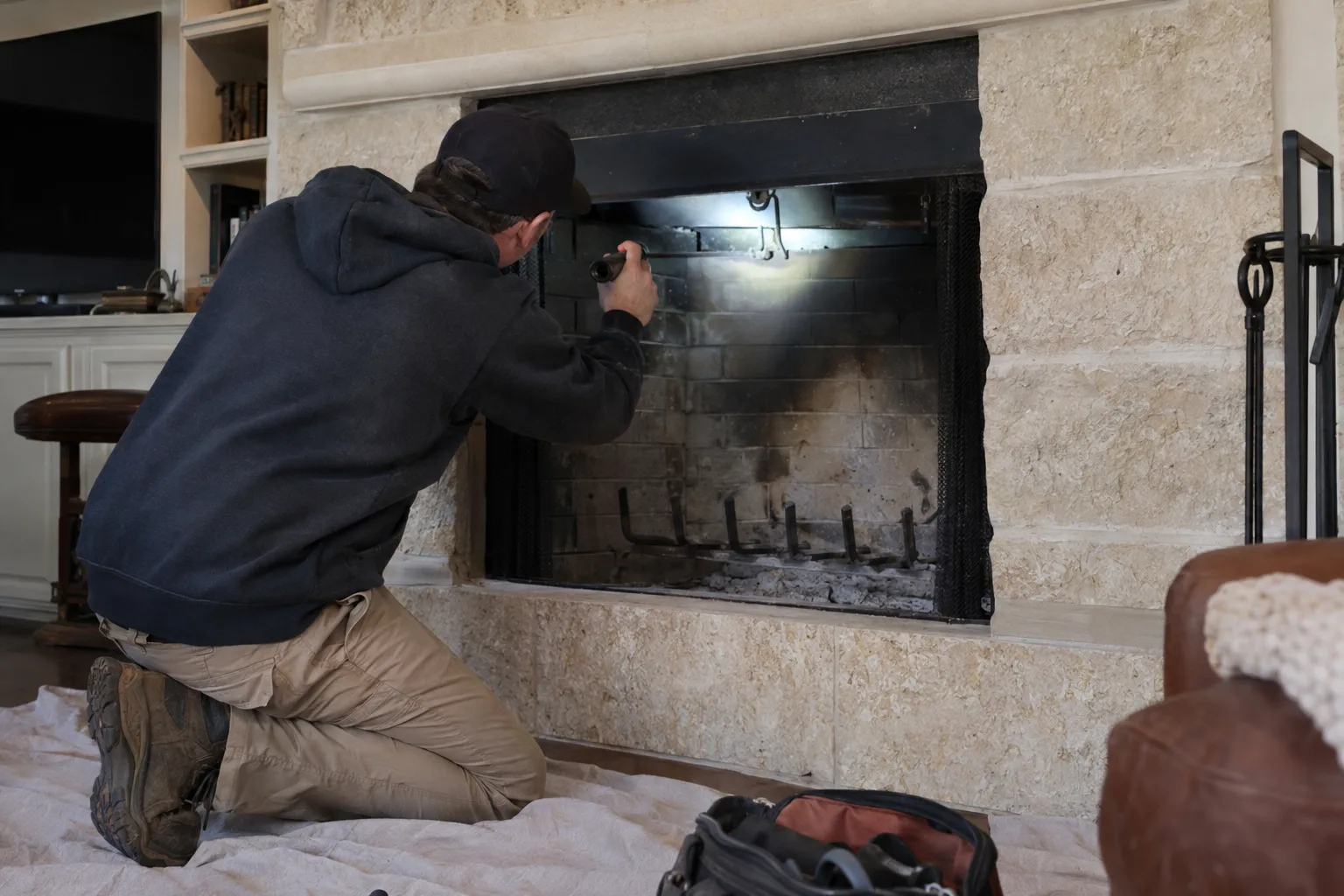
Before any brush touches the flue, we assess what we're working with. A camera or visual inspection of the firebox and flue gives us a baseline. We check for animal debris - nesting material, bird nests, wasps - that would need to be cleared before sweeping begins. We also note the current creosote stage so we know what tool sequence the job requires. Stage 2 and Stage 3 deposits require different brush types and, in some cases, chemical pre-treatment before mechanical cleaning is effective.
Implementation
Chimney sweeping runs top-down. The chimney brush enters from the chimney cap and works down the liner in overlapping passes. For clay tile liners common in older OKC homes, we use flexible-shaft brushes to avoid tile damage. Stainless steel liners get a different rod system. At the firebox end, we connect the commercial vacuum before the final passes so no debris migrates into the room. Soot, ash, creosote flakes, and any debris are pulled through a contained system.
Post-Service Documentation
Every cleaning ends with a written job report. It lists the creosote stage at entry, the tools and method used, any structural observations noted during the sweep, and the post-cleaning condition. If we find anything during the sweep - a damaged liner section, a cracked firebox wall, a missing cap - it goes in the report. You decide what to do next. We just make sure you have the information.
Oklahoma City Areas We Serve
We serve homes and businesses across the full Oklahoma City metro.
Our crews dispatch directly from Oklahoma City and cover the full metro area. We serve neighborhoods throughout OKC including Edmond, Yukon, Mustang, Moore, Midwest City, Del City, Choctaw, and Bethany. If you're in the Oklahoma City market, reach out and we'll confirm availability for your address.
Oklahoma City
Edmond
Yukon
Mustang
Moore
Midwest City
Del City
Choctaw
Bethany
Chimney cleaning questions
How long does a chimney sweeping appointment take from start to finish?
Most standard chimney cleaning appointments take 45 to 90 minutes. Stage 2 creosote deposits or flues with animal debris require additional time before the brush sequence begins. The written job report is completed on-site before the technician leaves. Your schedule won't be held open all day - we confirm appointment windows at booking.
What's the difference between Stage 1, Stage 2, and Stage 3 creosote - and does it change what you do?
Yes, the creosote stage directly changes the tools and method used. Stage 1 is flaky and brushable with standard equipment. Stage 2 is tar-like and needs heavier brush pressure and sometimes chemical pre-treatment. Stage 3 is glazed and requires chemical loosening before mechanical cleaning works. We document which stage we find at entry - so you know exactly what your flue held.
Do I get anything in writing after the cleaning, or just a verbal summary?
Every appointment ends with a written job report left with the homeowner. It lists the creosote stage found at entry, the post-cleaning condition, tools used, and any structural observations noted during the sweep. This is the record that makes your next appointment faster - we're not starting the assessment from scratch.
Can you still clean my chimney mid-season if I've already been burning all fall?
Scheduling mid-season is fine - our 10-technician crew serves the full OKC metro year-round. Mid-season cleaning is actually common for households that burn frequently from October through February. Heavy use accelerates Stage 1 to Stage 2 transitions. Waiting until spring doesn't reduce the risk; it just delays the documentation of what's already in your flue.
Why does it matter that your crew has been in Oklahoma City since 2016?
Local experience changes what technicians look for and where. OKC burn habits - overnight smoldering fires, partially seasoned wood, heavy use during cold snaps - produce creosote patterns our crews recognize on sight. That familiarity shortens diagnosis time and reduces the chance of misclassifying a Stage 2 flue as Stage 1. Ten years of Oklahoma City market experience isn't a marketing line - it shows up on the job report.
Get Your Chimney Cleaned and Documented This Season
Oklahoma Chimney Sweep Pro cleans your flue, documents the creosote stage, and leaves you a written record of what we found.
Call (405) 451-4866 or send a message through our online contact form to schedule your chimney cleaning in Oklahoma City. Our team of 10 serves the full OKC metro, with same-market dispatch and no outsourced crews. Tell us your address and your last cleaning date - we'll take it from there.