Services
Cleaning & Sweeping
Inspections & Diagnostics
Masonry & Structural Repair
Leaks, Water & Emergency
Caps, Dampers & Covers
Fireplaces
Commercial & HOA
Areas About
Resources
Contact
Measured, not guessed

Chimney Draft Analysis in Oklahoma City, OK

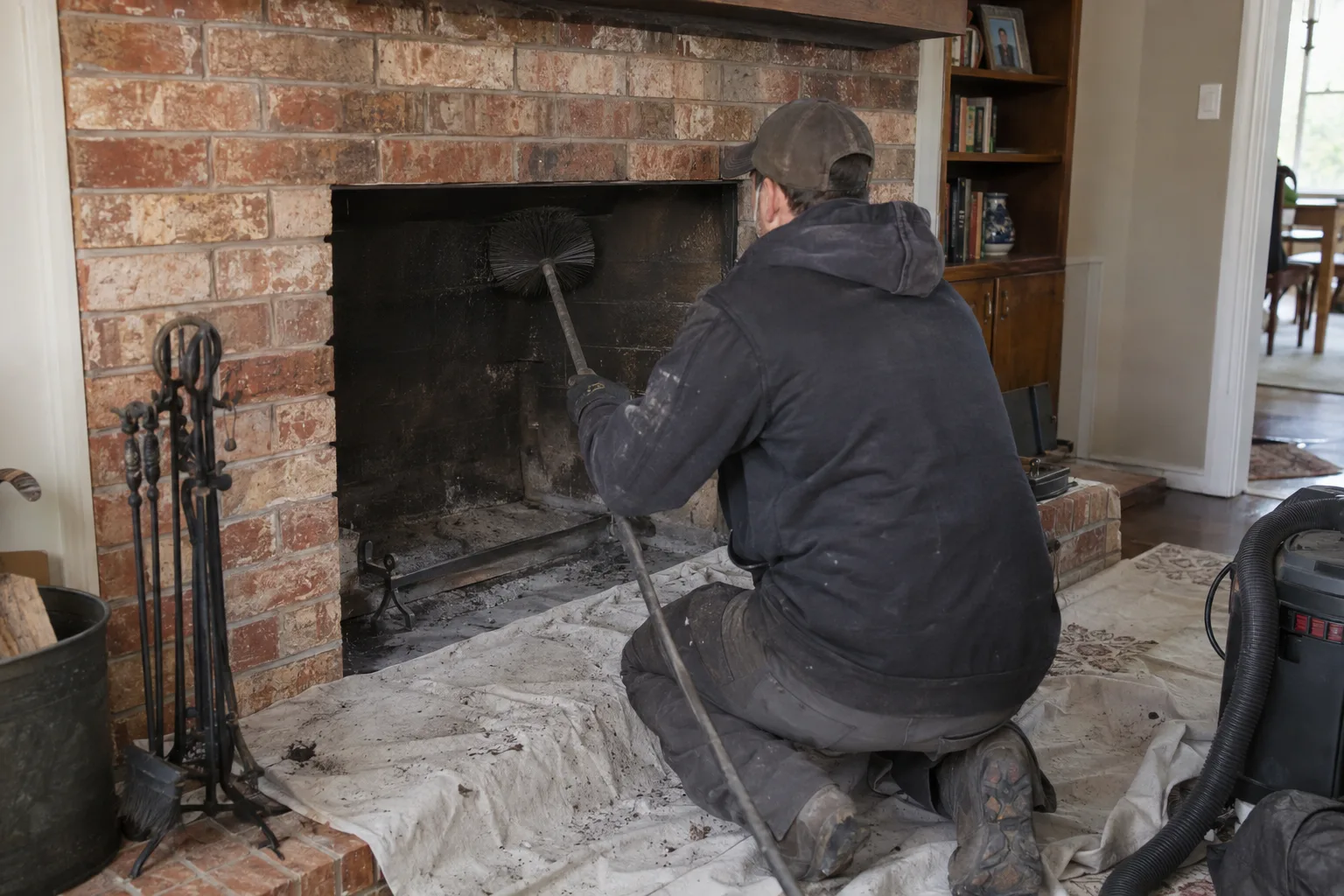
Technician measuring pressure differential at a brick firebox opening in an Oklahoma City home

Why Your Chimney Pushes Smoke Back Into the Room

Smoke entering your living room usually means the chimney lacks the air pressure to draft correctly.

You light the fire. Two minutes later, smoke drifts across the living room. You open the damper wider. You try different wood. Nothing changes. The fireplace smells fine - it just won't draft.

Here's what most homeowners don't realize about draft failure: the chimney itself is often not the problem. The problem is air.

That's where chimney draft analysis in Oklahoma City comes in. A chimney draft analysis is a field-measured diagnostic - not a visual inspection - that quantifies air pressure conditions at the firebox opening. It tells you whether draft failure is caused by chimney geometry, building envelope conditions, or appliance interaction. The result is a specific diagnosis, not a guess.

Oklahoma Chimney Sweep Pro has served Oklahoma City homes since 2016. Our technicians measure pressure differential - the actual difference in air pressure between the firebox opening and the interior living space - using field instruments during the analysis. That measurement determines whether the solution involves the chimney at all.

Pressure gauge at the firebox opening with the needle in the negative zone NegativePositivePressure at the firebox
  • Chimney geometry
  • Building envelope conditions
  • Appliance interaction

Oklahoma City Homes Create Specific Draft Conditions

OKC's dominant housing stock creates draft problems that visual inspection alone cannot identify.

Oklahoma City has a high percentage of slab-foundation homes built from the 1980s through the 2000s. Many feature open floor plans and tight building envelopes - upgraded insulation, weatherstripped doors, double-pane windows.

These homes are efficient. They're also sealed.

When a fireplace ignites in a tightly sealed OKC home, it competes with the HVAC return system, the kitchen exhaust fan, and every other appliance pulling interior air. The fireplace needs makeup air - fresh outside air required for proper draft - and the building won't give it enough. Interior pressure drops below exterior pressure. That condition is called negative building pressure, and it pulls combustion gases back into the room instead of sending them up the flue.

We've analyzed draft conditions across Oklahoma City's residential building stock. From postwar bungalows in Gatewood to energy-efficient new construction further north, the same fireplace layout behaves differently depending on how the home is sealed. Knowing that difference is what drives an accurate diagnosis.

Range hood, HVAC return and bathroom fan all pulling interior air away from the fireplace during an appliance interaction test Range hoodHVAC returnBath fanFireplace
Cycling range hoods and HVAC during the analysis replicates real operating conditions and shows exactly how building appliances compete with the fireplace for interior air.
From the field

What I Found on a Slab-Foundation Home Near Lake Hefner

The chimney was structurally sound - the building's air balance was the entire problem.

Field account from the Oklahoma Chimney Sweep Pro team

I got a call from a homeowner near Lake Hefner. He'd had three different inspections over two winters. Every technician told him the chimney looked fine. He'd replaced the damper, burned seasoned oak, and even tried leaving a window cracked - which helped slightly, but made the room cold.

When I arrived, I took a pressure differential measurement at the firebox opening before I touched anything else. The reading showed the interior was running at measurable negative pressure relative to outside - not unusual for a 1994 slab-foundation home with a newer HVAC system.

I ran the kitchen range hood and watched the draft reverse completely within 45 seconds.

The chimney flue geometry - its height, diameter, and cross-sectional shape - was properly sized for the firebox. Stack effect, the natural tendency of warm air to rise through a vertical column, was functioning. But the building's HVAC system was winning the air competition every single time.

The solution wasn't a chimney repair. It was a makeup air pathway - a controlled fresh-air introduction near the firebox that gave the system the combustion air it needed. Total cost for the homeowner was a fraction of what another liner or damper replacement would have run.

This is why pressure differential measurement comes first. Fixing the wrong thing is expensive. Measuring the actual cause takes 20 minutes.
Job reportNear Lake Hefner, 1994 slab home
History
Three inspections over two winters, all "looks fine"
First reading
Negative interior pressure vs outside
Range hood on
Draft reversed completely within 45 seconds
Flue geometry
Properly sized for the firebox
Fix
No chimney repair makeup air pathway

A common question we hear: "If the problem is my building's air balance, does that mean you can't fix it?"

No. It means we fix the right thing.

  • Negative building pressureMakeup air pathway
  • Flue geometryLiner sizing or firebox ratio correction
  • HVAC-fireplace pressure competitionAdjust the operational sequence first

What Happens After We Identify the Cause

Every finding from our draft analysis maps to a specific next step - not a general recommendation.

If negative building pressure is the cause, the correction involves makeup air - a controlled pathway that gives the fireplace the fresh combustion air the sealed building isn't providing. If flue geometry is the cause, the solution might involve liner sizing or firebox ratio correction. If HVAC-fireplace pressure competition - the interaction between your home's return system and the fireplace operating simultaneously - is driving the failure, we adjust the operational sequence before recommending hardware.

We don't move to airflow correction or structural chimney work until the pressure differential measurement tells us which category the problem belongs to. That sequence protects your investment and prevents unnecessary repairs.

Our Standards for Chimney Draft Analysis

We measure before we recommend - every time, on every visit.

Our chimney draft analysis process follows a consistent standard across all OKC residential and commercial work:

  • Pressure differential measurement at the firebox openingtaken before and during appliance interaction testing
  • Stack effect assessmentwe confirm whether the flue's warm-air rise is functioning at baseline
  • Appliance interaction testingHVAC, range hoods, and exhaust fans are cycled during the analysis to replicate real operating conditions
  • Makeup air calculationwe determine whether sufficient fresh combustion air is available given the home's envelope rating
  • Flue geometry reviewheight, diameter, and cross-sectional ratio are checked against firebox opening size
  • Written findingsevery analysis produces a documented cause category and recommended correction path

No generic recommendations. No "try burning hotter." Documented measurements, documented findings.

How Our Chimney Draft Analysis Works

The analysis follows three stages: measure, map the cause, and prescribe the correct fix.

  1. Diagnostic Stage

    We start with pressure differential measurement at the firebox. This tells us the current air pressure relationship between the firebox opening and the interior living space. We note the HVAC status, time of day, and building conditions. Then we cycle appliances - range hood, HVAC return, bathroom fans - to reproduce real operating conditions and watch how pressure changes at the firebox in real time.

  2. Cause Mapping

    Once we have pressure readings across multiple appliance states, we map the findings. Here's how common draft failure symptoms connect to probable cause categories:

  3. Post-Analysis Protocol

    After cause mapping, we deliver written findings with a specific correction path. If the problem is makeup air, we outline the pathway solution. If flue geometry is involved, we scope the correction. If the cause remains unclear after the first visit, we escalate to forensic chimney draft analysis - a deeper instrumented diagnostic for situations where standard testing doesn't produce a clean answer.

SymptomProbable Cause Category
Smoke rolls back immediately at ignitionNegative building pressure / insufficient makeup air
Draft works until HVAC kicks onHVAC-fireplace pressure competition
Slow ignition, fire hard to establishCold flue / stack effect not initiating
Odor with no visible smokeDraft failure under low-fire conditions
Works in summer, fails in winterSeasonal pressure reversal; outside air colder than flue
Works with a window crackedMakeup air deficiency confirmed

This table is a field tool, not a final answer. Multiple cause categories can overlap. The measurement confirms which one is primary.

The escalation path: draft analysis first. Airflow correction if the cause is confirmed. Forensic analysis if the picture is still incomplete.

  1. 1Draft analysis first
  2. 2Airflow correction if the cause is confirmed
  3. 3Forensic analysis if the picture is still incomplete

Oklahoma City Areas We Serve

Oklahoma Chimney Sweep Pro serves residential and commercial customers across Oklahoma City.

We work throughout Oklahoma City and surrounding communities. Our teams are familiar with the varied construction eras across OKC - from older established neighborhoods to newer energy-efficient builds. If you're within the Oklahoma City metro, reach out and we'll confirm your service area when you call.

  • Oklahoma City
  • Surrounding communities
  • Older established neighborhoods
  • Newer energy-efficient builds

Chimney draft analysis questions

How long does a chimney draft analysis appointment take from arrival to written findings?

Most draft analysis appointments take 60-90 minutes on-site. The pressure differential measurement itself takes roughly 20 minutes. Appliance interaction testing - cycling your HVAC, range hood, and exhaust fans - adds time but produces the accurate cause map. Written findings are delivered before the technician leaves.

What's the difference between a draft analysis and a standard chimney inspection?

A draft analysis measures air pressure at the firebox opening. A standard inspection examines the chimney's physical condition - liner, crown, flashing, and masonry. Both are different tools answering different questions. If your chimney passed inspection but still smokes, a draft analysis is the correct next step.

My chimney was already inspected and found "fine" - why is the fireplace still smoking?

Passing inspection means the chimney structure is sound, not that airflow is correct. Tightly sealed homes can produce negative building pressure that pulls smoke back into the room despite a clean flue. Pressure differential measurement is the only way to confirm whether the problem is architectural rather than structural.

Will the draft analysis tell me exactly what needs to be fixed, or is it just a diagnosis?

Every analysis produces a specific correction path, not a general recommendation. If makeup air deficiency is the cause, we outline the pathway solution. If flue geometry is the issue, we scope that correction. You leave with a written findings document - not a list of possible problems.

Does measuring pressure differential damage anything inside the fireplace or flue?

No. The measurement is entirely non-invasive. Instruments are positioned at the firebox opening, not inserted into the flue. Nothing is disassembled, burned, or altered during the testing sequence. Your fireplace is in the same condition when we leave as when we arrived.

Book Your Chimney Draft Analysis Today

A 20-minute pressure measurement can tell you more than two seasons of guessing.

If your Oklahoma City fireplace isn't drafting correctly, the answer starts with measurement - not another inspection that ends with "everything looks fine." Call Oklahoma Chimney Sweep Pro at 405-451-4866 or email info@okchimneysweep.com to schedule your chimney draft analysis. Tell us what's happening when you light the fire, and we'll take it from there.