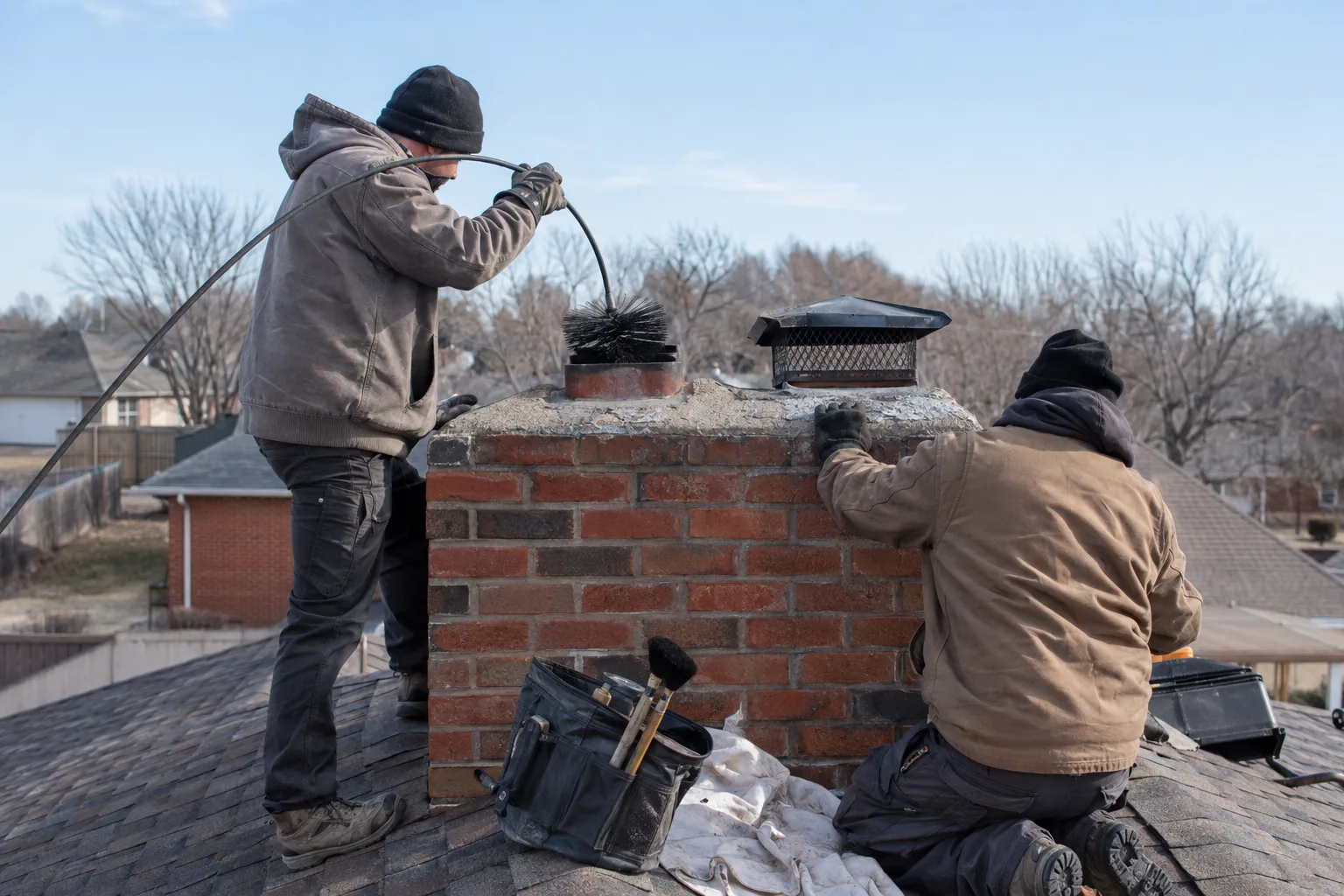
That sound is rarely random. Oklahoma City's tree canopy gives wildlife a direct bridge to rooflines. An uncapped chimney looks like a hollow tree to a raccoon, squirrel, or nesting bird. It's warm, sheltered, and quiet - exactly what they need.

Scratching, chirping, or shuffling inside the fireplace almost always means an animal is in the flue.
You might hear movement only at night. Or you notice a smell before you hear anything. Either way, this is something we identify and resolve before you use the fireplace again.
Oklahoma Chimney Sweep Pro handles chimney animal removal across Oklahoma City. We also cover emergency animal removal for situations where an animal is trapped, injured, or actively obstructing the flue.
Who's usually in the flue
OKC's metro wildlife has a clear pattern, and the chimney is one of its most common shelters.
Raccoons are the most frequent callers in early spring. A female looking for a nesting site will drop into an uncapped masonry chimney and stay. She's usually not alone for long. Squirrels enter through damaged or missing cap screens - prefab chase systems in newer OKC subdivisions are a common entry point when the chase cover warps or lifts.
Snakes, particularly rat snakes, occasionally work their way into the lower flue area from the firebox. Birds - primarily Chimney Swifts - nest inside open masonry flues during nesting season.
Here's what most homeowners don't realize about OKC chimneys: older tree-lined neighborhoods have a significantly higher intrusion rate. The combination of mature canopy and aging uncapped chimneys creates consistent access patterns our crew has mapped over years of service.
A routine cap check turned into a full nest removal and a legal conversation about federal bird protections.
I'm one of the technicians on the Oklahoma Chimney Sweep Pro crew. We got a call in late June from a homeowner in an established OKC neighborhood - older home, open masonry chimney, no cap. She'd been hearing chirping for about three weeks and assumed it was a bird stuck near the top.
When I got on the roof, I could see the nest structure clearly. Chimney Swifts. A cluster of them, actively nesting - eggs already in the nest. This happens more than people expect. The homeowner had no idea these birds were federally protected. She'd almost lit a fire the week before to "smoke them out," which would have been both dangerous and a federal violation.
I explained the Migratory Bird Treaty Act on the spot. We couldn't touch the nest. What I could do was document the entry point, confirm no structural damage was happening, and schedule a return visit after nesting season ended - typically late August for OKC. We came back in September, cleared the flue of all nesting material, and installed a stainless steel cap that same day.
That's the job. Not just removal - it's knowing what you're looking at before you touch anything.
No fire. No disturbed nest. No violation.
Chimney Swifts cannot be removed during active nesting season. This is federal law, not a policy.
The Chimney Swift (Chaetura pelagica) is a migratory bird protected under the Migratory Bird Treaty Act - a federal law prohibiting the disturbance or destruction of active nests of protected species. In Oklahoma City, Chimney Swifts typically nest from May through August.
If we identify Chimney Swifts in your flue, we will tell you clearly: removal is not legal until nesting is complete. We document the situation, confirm the timeline, and schedule cap installation for the first available date after the birds migrate. No guesswork, no shortcuts.
For all other species - raccoons, squirrels, snakes, non-protected birds - removal can proceed on our standard schedule.
Every chimney animal removal call follows the same sequence: identify first, remove second, close permanently.
We do not skip the entry point assessment. A new cap on a damaged crown will fail. We fix what allowed access before we close it.
We identify the species and document conditions before any removal begins.
The technician inspects the flue from both ends - firebox and roofline. We look for nesting material, feces, feathers, fur, or the animal itself. We identify whether the species is protected under the Migratory Bird Treaty Act. We assess whether young animals are present, which affects removal sequencing for raccoons in particular.
Removal method depends entirely on species, location, and whether juveniles are present.
Raccoons with young require a specific sequence - juveniles must be located and removed before the adult, or the adult will return. Squirrels are typically extracted from the upper flue. Snakes near the firebox are contained and removed without entering the living space. All nesting material - the nest material fire hazard - is cleared from the flue after the animal is out.
Before we leave, the flue is clear and the entry point is sealed.
We conduct a final flue inspection to confirm complete debris clearance. The chimney cap is installed and secured. We walk through the animal entry point assessment findings with the homeowner, so they understand exactly where the breach was and why the cap we installed addresses it. If the crown or chase cover needs additional work, we document it and schedule accordingly.
Oklahoma Chimney Sweep Pro serves homeowners across the Oklahoma City metro.
We work throughout OKC - from established neighborhoods with mature tree canopy and older masonry chimneys to newer subdivisions with prefab chase systems. If you're in the Oklahoma City area and have wildlife in your chimney, we're your local crew.
Same-day removal is standard for raccoons, squirrels, and snakes. The technician identifies the species first. If Chimney Swifts are present, removal cannot legally happen until nesting ends - typically late August in Oklahoma. For all non-protected species, inspection and removal happen in one visit when access permits.
Raccoons require a sequenced removal - juveniles come out before the adult. Birds must be identified before anything is touched. Chimney Swifts are federally protected and cannot be disturbed during active nesting. That legal distinction changes the entire job. Most companies miss it. We explain it before we start.
Flue debris clearance is part of every animal removal job. Nesting material - dry leaves, twigs, feathers, feces - is a fire hazard. The chimney is not safe to use until that material is fully cleared. We do not leave the job with an open flue and a dirty firebox.
Installing a cap with an animal still inside traps it. Trapped animals cause additional damage and create a serious odor problem. We remove first, clear the flue, inspect the entry point, then install the cap. That sequence also lets us check whether the crown or chase cover needs work before we seal it permanently.
No - smoke drives animals deeper into the flue, not out. It can injure or kill the animal, push it toward the firebox, and ignite nesting material already present. If you suspect an animal is in the chimney, keep the damper closed and call us directly at 405-451-4866.
Oklahoma Chimney Sweep Pro identifies the species, removes it correctly, and caps the flue permanently.
Call us at 405-451-4866 or email info@okchimneysweep.com. We'll schedule an inspection, walk you through what we find, and explain every step before we start. If it's an emergency animal removal situation, call us directly.
Cap installation is the final step on every animal removal job. Entry point first, then the cap.