What Creosote Is - and Why It Builds Up in OKC Chimneys
Creosote is the sticky, carbon-based residue that coats your flue every time you burn wood.
Here's what most homeowners don't realize about creosote: it doesn't form equally in every chimney. Fuel quality drives most of it. Wood moisture content - the percentage of water in firewood at the time of burning - matters more than almost anything else. Wood above 20% moisture burns at lower temperatures. Lower temperatures mean more unburned particles. More unburned particles mean more creosote per cord of wood burned.
Oklahoma City's burn season runs October through March. During that stretch, a lot of homeowners burn whatever wood is on hand. Some of it hasn't had enough time to dry down. A full season of that leaves a liner heavily coated - sometimes with multiple distinct deposit types stacked on top of each other.
Oklahoma City Burn Habits Create Specific Creosote Patterns
Oklahoma Chimney Sweep Pro has worked OKC chimneys since 2016 - and the patterns are consistent.
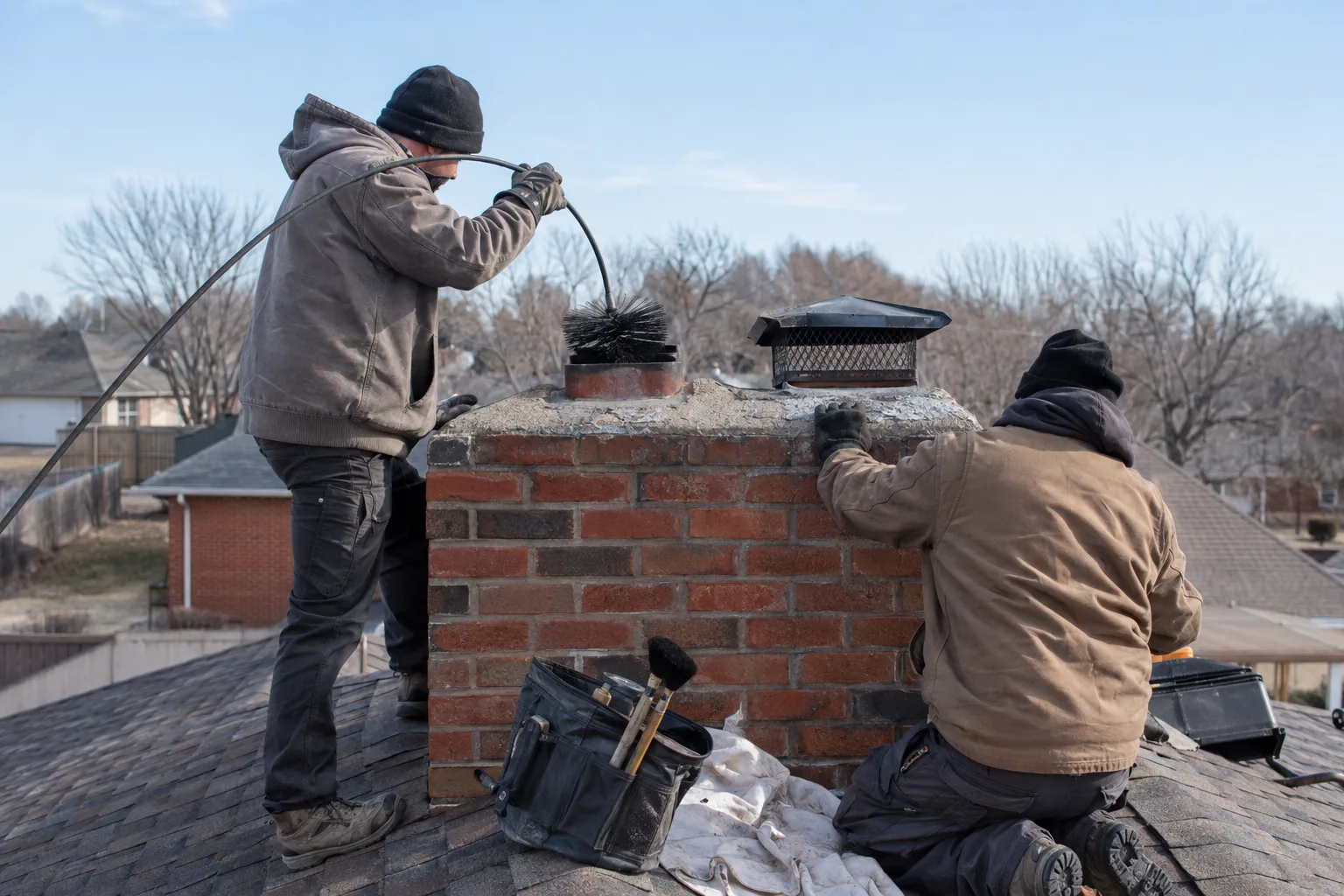
Our 10-person crew dispatches from Oklahoma City and covers the full metro area. We've cleaned flues in neighborhoods where wood-burning fireplaces are a primary heat source through winter - not just occasional use. Those chimneys build up faster than most homeowners expect.
OKC's temperature swings also matter. A cold January morning means a cold-start fire. Cold starts push flue gases through a cold liner before the system has warmed up. That's exactly the condition that drops flue gas temps below the creosote formation threshold fastest. Overnight smoldering - damping down a fire to stretch a log load - makes it worse. Slow-burning, low-oxygen combustion produces the heaviest, stickiest deposits.
We've seen that pattern repeat in chimney after chimney across this city. Understanding it shapes how we approach every job.
From the field
The Stage Assessment That Changed How We Approach Every Job
The stage of your creosote deposit determines every tool choice we make.
I've been on jobs where a homeowner assumed they needed basic cleaning and we found Stage 2 deposits lining the full length of the flue. I've also been on jobs where someone expected the worst and we found light Stage 1 buildup after a shorter burn season. Neither situation looked the same from the outside. That's exactly why we assess the stage first - before we touch a single brush to the liner.
Stage 1 creosote is the earliest form of deposit. Dusty, powdery, light gray or black. It brushes off with a standard rotary pass. Stage 2 creosote is a different material entirely. It's been heated, compressed, and hardened into a tar-like crust. It doesn't respond to a single pass. It requires stiffer brush types, additional rod configurations, and in some cases a chemical pre-treatment to break down the glaze before mechanical removal can finish the job.
What we've found in OKC is that Stage 2 deposits often appear after seasons where homeowners ran overnight smoldering fires consistently. The deposit builds in cycles - soft in the early season, hardened by February once it's been re-heated dozens of times.
The chimney fire risk threshold - the accumulation level at which an ignition inside the flue becomes likely - is reached at Stage 2 at any measurable thickness. We don't wait for it to get worse before we recommend action. We document what we find, show the homeowner, and match the removal method to what's actually there.
Your Chimney's Buildup Level Doesn't Change Our Commitment
We match the removal method to your deposit - whatever stage we find.
Some homeowners wonder whether a heavily built-up flue will affect the quality or thoroughness of the job. It won't. Stage 2 removal takes longer than Stage 1 removal. The tools are different. The pass count is higher. But the outcome standard is the same: a liner cleared to its working surface, inspected before we pack up.
Flue wall adhesion - the bonding of hardened creosote to liner tile or metal - is tightest in older flues with rough or cracked tile surfaces. Those surfaces grip deposits more firmly. We account for that in our tool selection and don't call a job done until we've confirmed the liner surface by inspection.
Our Standards for Creosote Removal
Every job starts with stage assessment. Every job ends with liner confirmation.
Here's how the two deposit types compare - and what each one requires:
| Stage 1 Creosote | Stage 2 Creosote | |
|---|---|---|
| Appearance | Dusty, powdery, gray or black | Flaky, crunchy, tar-like crust |
| Texture | Soft, loose | Hard, compressed |
| Tool Type | Standard rotary brush | Stiff-bristle brush, heavier rod load |
| Pass Count | Single-pass capable | Multi-pass required |
| Pre-Treatment | Not typically needed | Chemical pre-treatment in some cases |
| Risk Level | Low at typical thickness | Active risk at any measurable thickness |
Our removal standards across all jobs:
- Stage assessment documented before tools are selected
- Rotary cleaning system used for Stage 2 deposits - not hand-rod brushing alone
- Full-length liner pass confirmed before job is called complete
- Drop cloths and containment in place inside the home throughout the job
- Visual liner inspection at job completion, findings shared with homeowner
How We Execute Creosote Removal
Our process is structured so nothing gets skipped - regardless of buildup level.
Diagnostics
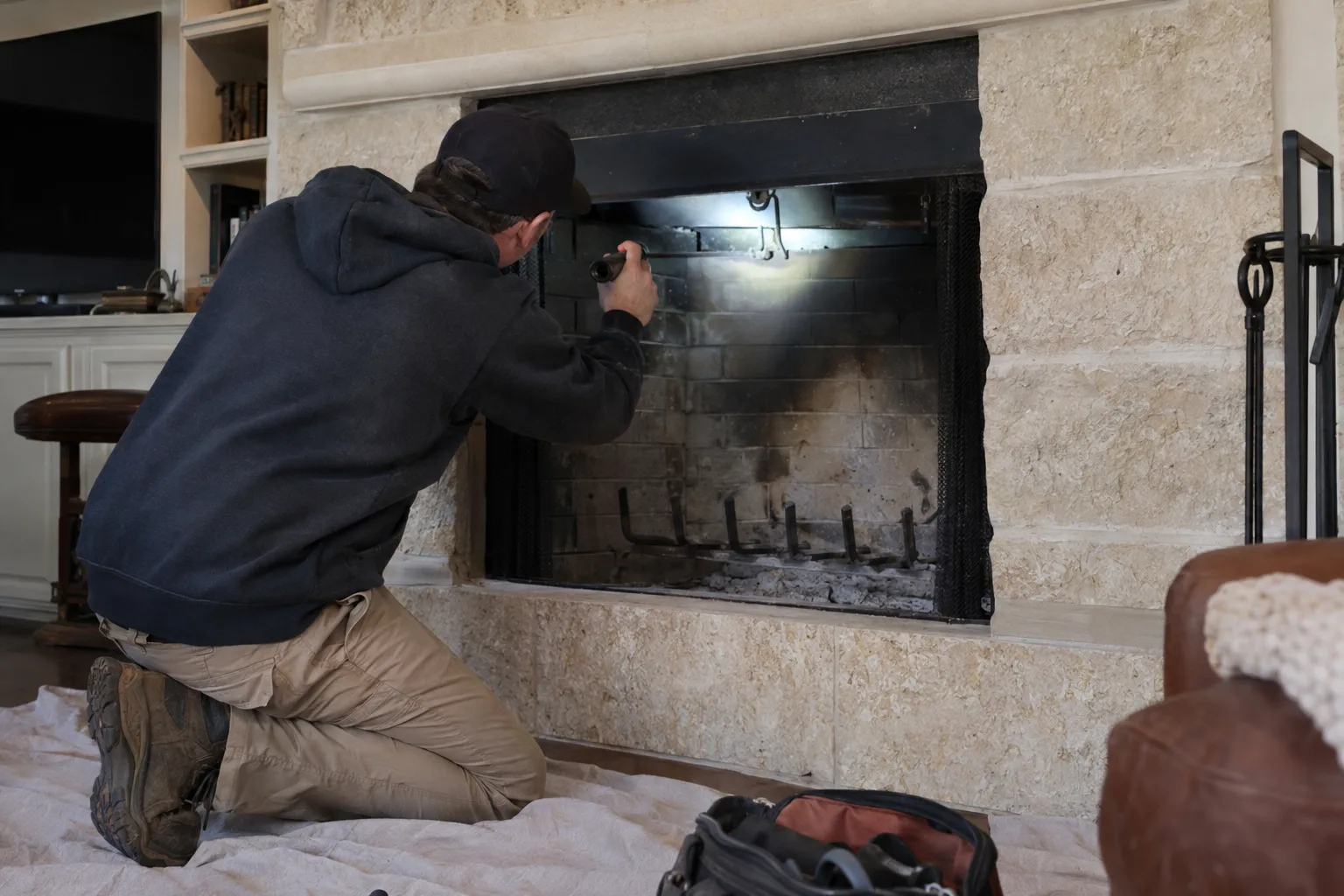
We begin at the firebox and work up. The first task is always stage identification. We check deposit color, texture, and thickness at multiple points along the liner. If we find mixed-stage deposits - which happens in chimneys that have had inconsistent burn habits across seasons - we document each zone separately. That assessment determines everything that follows.
Implementation
Stage 1 deposits are cleared with a rotary cleaning system in standard brush configuration. A single methodical pass clears the liner walls from top to bottom, with debris dropping into the firebox and collected.
Stage 2 deposits get a different approach. We start with the appropriate chemical pre-treatment if the glaze layer is thick. We let it work. Then we run the stiffer-bristle brush in multiple passes, checking adhesion between cycles. This isn't a faster process. But it's the right one.
Post-Service Testing
After the liner is cleared, we inspect the interior surface for remaining adhesion points, liner damage, or any structural concerns the removal process revealed. Homeowners get a plain-language summary of what we found, what we removed, and what - if anything - needs follow-up attention.
Areas We Serve
We schedule creosote removal appointments across the full Oklahoma City metro area.
Oklahoma Chimney Sweep Pro dispatches from Oklahoma City and serves the full OKC service area. This includes neighborhoods across the metro where wood-burning fireplaces see regular winter use. Call us to confirm scheduling availability for your specific address.
Ready to Clear Your Flue Before Next Burn Season
The best time to schedule creosote removal in Oklahoma City is before October.
Get ahead of OKC's burn season. Call Oklahoma Chimney Sweep Pro at (405) 451-4866 or email info@okchimneysweep.com to schedule your stage assessment and cleaning. We'll confirm the deposit type, match the method to what we find, and leave your flue clean before you light the first fire of the season.